
















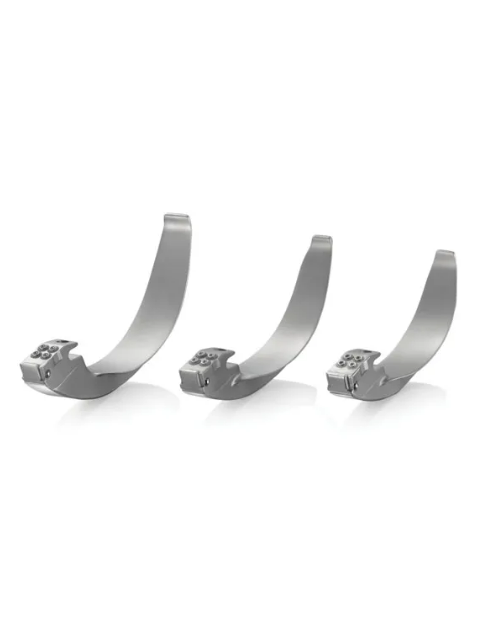

ClearVue VLXL Wide Screen Video Laryngoscope
In Stock
Usually ships in 1 - 3 Days
Sale:
$6,506.00
1
/ Each
+
Free shipping
Recommended Accessories

Ask an expert
Buy with confidence.
Contact our experts today.
Buy with confidence.
Contact our experts today.
Description
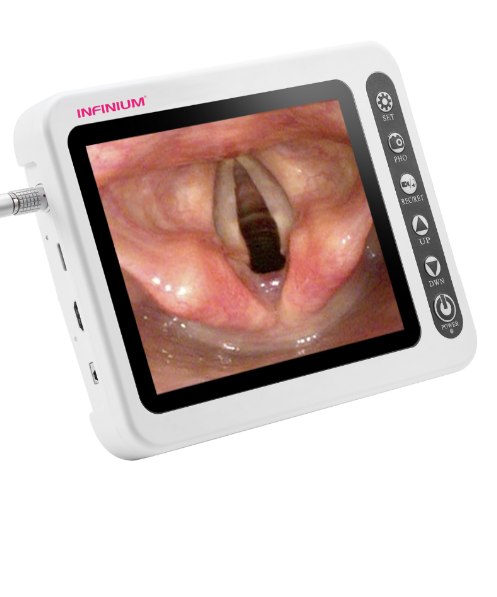
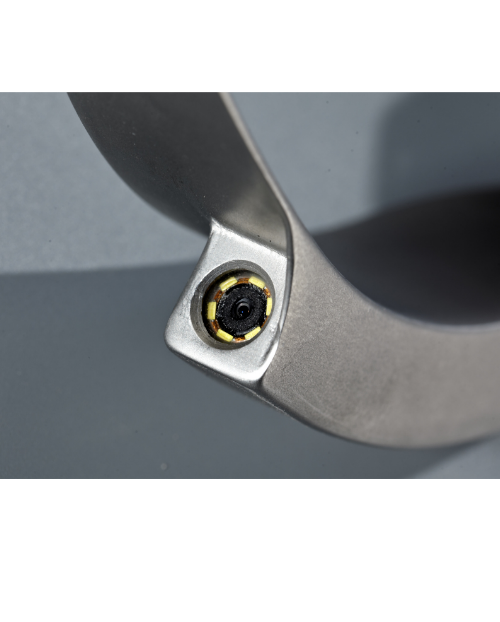
The Infinium ClearVue VLXL video laryngoscope adopts state-of-the-art image technology and possesses the advantage of a 2.0-megapixel full-view camera with an 8-inch high-resolution monitor. The ClearVue features a rechargeable Li-ion battery for mobile use. The HD optics offer a unique anti-fog and high-resolution image. The overall design is compact and ergonomic. A high-resolution view of the glottis will enable the clinician’s first attempt success while minimizing any chance of a complication during the intubation process.
Clinical Usage & Benefits: Many reasons may require intubation with an endotracheal tube, including surgery, anesthesia, trauma, or serious illness. Primary use cases include:
- Before surgery and anesthesia.
- For foreign body removal.
- Protect the airway from bleeding or stomach content.
- View airway abnormalities.
- After surgery ventilation support.
- Support difficulty in breathing.
- When heavy sedation is required.
- For higher oxygen concentrations.
Better Viewing: The obvious key advantage of high-definition video laryngoscopes is being able to visualize the patient’s airway in real-time for accurate tube placement. It creates much more convenient viewing options for both the primary caregiver and the medical team.
Increases First Attempt Success: Studies show that video laryngoscopy helps intubate patients on the first attempt more than traditional methods. This is especially true in critical care settings and during difficult intubation.
Lower Rates of Esophageal Intubation: One of the most common mistakes in intubation is to inadvertently place the endotracheal tube in the esophagus instead of the lower trachea. Video laryngoscopes are proven to reduce this common issue significantly making the overall successful procedure faster and less traumatic.
Reduces Airway Trauma: Using a video laryngoscope can reduce airway trauma by the reduced force that is required compared to a direct laryngoscope. This means less potential reflex reaction, tissue irritation and damage, bleeding, and reduced need for an induction agent.
Improved Training & Teamwork: With a screen that can be seen by others, team members can see the intubation in real-time and either provide assistance or use it as real-time training. It’s also a faster signal to other clinicians and responders on the status and difficulty of the event providing a window into potential next steps.
Recorded Events Reduce Additional Procedures: Recorded events can reduce the number of additional exploratory procedures covering the same ground. Any previous damage to the recorded area can be viewed without a second exploration.
Easier to Use: Video laryngoscopes increase “successful” intubations in difficult intubations and when the care provider is less experienced. The training curve is faster than traditional methods while the video and lighting greatly reduce the most common mistakes. This means fewer bottlenecks and a short average time for successful intubation.
Addresses Immobility Issues: With a video laryngoscope, it is not necessary to align the airway axes. This allows intubation to happen in cases with limited head and neck mobility.
Pays for Itself: Considering the critical nature of failed intubations, it is easy to understand that a small reduction in failure rates can have a tremendous positive impact on subsequent health events and costs as well as saving additional lives. Video laryngoscopes pay for themselves by providing perceived and statistically proven improvements in these failure rates.
Features
- High Resolution 8 Inch Screen.
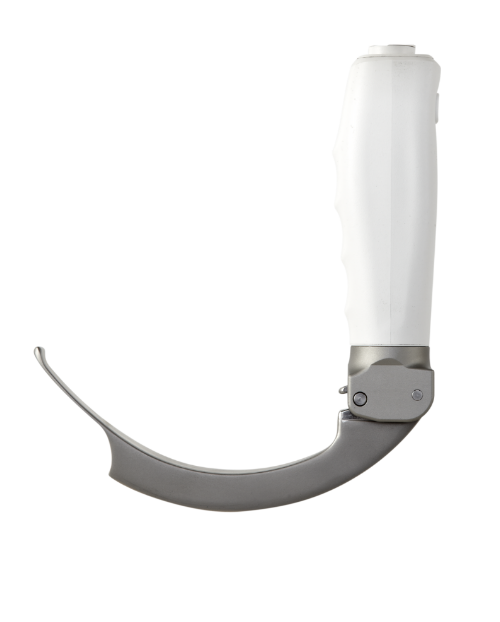
- Rigid Steel Construction of Hand Pieces.
- Quick installation and Removal of Blades.
- Quick Shot Camera Button for Photo and Video Recording.
- 4 GB Data Storage (Approx. 80 Minutes of Stored Video).
- Use on Battery or AC Power.
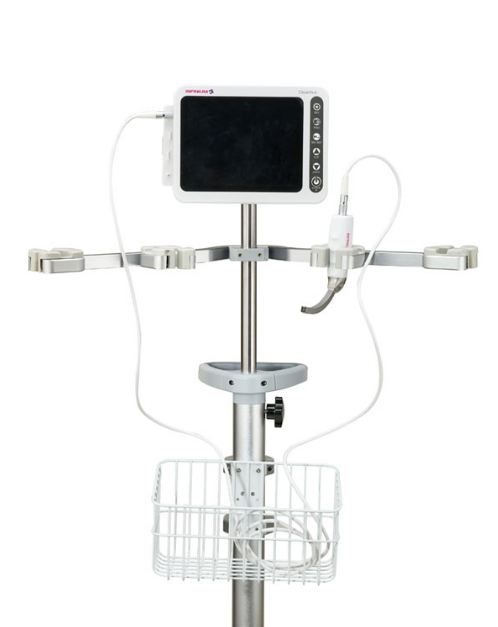
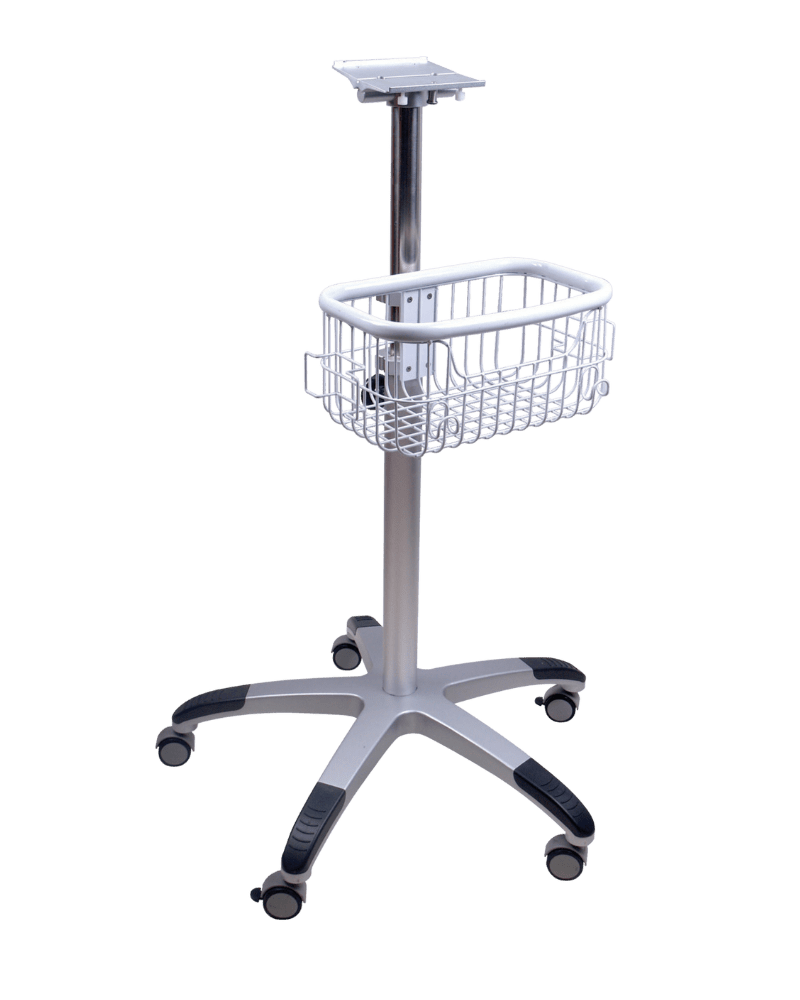
- Optional ergonomic custom rolling stand.
- 2 Years Warranty.
- Screen Reinforced with Anti-Shatter Protection.
- Light Weight.
- Long Lasting Rechargeable Li-ion Battery.
- 8 Inch HD Display.
- Anti-Fog Optics Lens.
- 2.0 Mega Pixel Camera With Video.
Product Specifications
| Manufacturer Part 000.300.0009: | Option with Set of Reusable Blades |
|---|---|
| Manufacturer Part 000.300.0004: | Option with Set of Disposable Blades |
| Warranty: | 2 Years |
| Display Size: | 8" Full View |
| Screen: | LCD; LED Scratch-Resistant Anti-Glare Screen |
| Resolution: | 1024 x 786 |
| Video Refresh Rate: | 30FPS |
| Handle Material: | ABS Comfortable Ergonomic Short Handle Design |
| Resolution: | 2.0 MP |
| Field Angle: | 66 Angle |
| Illumination: | >800LUX |
| Battery Type: | Rechargeable Lithium-Ion |
| Max Battery Life: | 2 hrs |
|---|---|
| Voltage: | 3.7V |
| Battery Capacity: | 3200mAh |
| Battery Charging Time: | 4 hrs |
| Power Adapter: | Input 100-250V, 50/60Hz |
| Transport & Storage Temperature: | -10oc to +45oc |
| Transport & Storage Humidity: | <93o |
| Transport & Storage AP: | 500hPa to 1060hPa |
| Temperature Working Condition: | +5oc to +40oc |
| Humidity Working Condition: | 30o to 85o |
| AP Working Condition: | 700hPa to 1060hpA |
See any errors on this page? Let us know